
Rockwall Divorce Mediation Attorney
A Calmer Path Through Divorce With Experienced Guidance
Divorce affects every part of your life, from your finances to your daily time with your children. If you live in or around Rockwall and want to work through this transition without a public courtroom fight, mediation can offer a more private and structured way forward. As your divorce mediation attorney Rockwall, we work to guide you through each step so you can move ahead with clarity and confidence.
At Mueller Family Law Group, our family law attorneys focus on helping clients protect what matters most: income, assets, and family stability. We have helped many North Texas families resolve difficult issues through mediation while keeping future co-parenting relationships in mind. Our goal is to give you a clear process, steady legal advice, and practical support so you do not feel alone in important decisions.
Contact our Rockwall divorce mediation lawyer by calling (214) 225-6766 today!

-
 Owner & Managing Partner Jim MuellerJim approaches all his divorce cases with the goal of helping clients divide their assets without unnecessarily dividing the family, especially where the interests of children are concerned.
 -
Partner Abby M. FosterAbby Foster combines board-certified family law expertise with deep involvement in the Collin County legal community, providing clients with knowledgeable, respected representation backed by years of recognized excellence and leadership in family law.
-
Partner Rob McAngus
Rob is a partner at Mueller Family Law Group. He is board certified in Family Law by the Texas Board of Legal Specialization and a Fellow of the American Academy of Matrimonial Lawyers.
-
Partner Jonathan J. BatesJonathan J. Bates brings more than three decades of experience to complex family law matters, combining recognized leadership, board-certified expertise, and a distinguished record of service to the family law community at the state and national levels.
-
Partner Paul Hewett
-
Partner George ParkerGeorge Parker combines decades of family law experience with a thoughtful, strategic approach, developing tailored solutions that help clients achieve their goals while honoring their priorities, values, and long-term interests.





















How Divorce Mediation Works In Texas
When you are considering mediation, it helps to know how it fits into the Texas divorce process. Mediation is a structured negotiation where a neutral mediator works with both spouses to help them reach agreement on issues such as property division, support, and parenting arrangements. Each spouse typically has a lawyer who provides private legal advice before and during the mediation sessions.
In many North Texas cases, including those that involve families from Rockwall, courts often encourage or require mediation before a final trial is scheduled. The divorce is still filed in the appropriate court that serves your county, and legal deadlines still apply. Mediation can take place early in the case or after some financial information has been exchanged, depending on what is needed to have productive discussions.
Mediation sessions are confidential under Texas law in most circumstances, which means settlement offers and discussions generally do not become part of the public court record. The mediator does not make decisions for you or act as a judge. Instead, the mediator helps both sides communicate, explore options, and move toward common ground. If you reach agreement, your attorneys prepare written documents that can be submitted to the court for approval, and those documents typically become the basis for your final divorce decree.
divorce Mediation FAQ
Have questions? We are here to help. Still have questions or can't find the answer you need? Give us a call at 214-225-6766 today!
-
Do I Have To Go To Court If My Rockwall Divorce Settles In Mediation?
Even when you reach a full agreement in mediation, there is usually still some limited court involvement to finalize your divorce. In Rockwall County, this often means a brief appearance or submission of paperwork so the judge can review and sign your final decree. The difference is that the hearing is typically shorter and more straightforward because the major decisions have already been made in mediation rather than argued in a contested trial.
-
Can Mediation Work If My Spouse And I Barely Speak?
Mediation does not require you and your spouse to sit in the same room or communicate directly. Many Rockwall cases use a format where each person is in a separate space, and the mediator and attorneys carry messages back and forth in a calm, structured way. This setup can reduce tension and still allow both sides to explore options, ask questions, and move toward agreement without the pressure of face-to-face discussions.
When your future, family, and financial stability are on the line, you need verified authority. Every single partner at Mueller Family Law Group is Board Certified in Family Law by the Texas Board of Legal Specialization—a distinction held by fewer than 1% of all Texas attorneys. From leadership on the Texas Family Law Foundation Legislative Committee to diplomate membership in the American College of Family Trial Lawyers (limited to the top 100 trial lawyers nationwide), our attorneys don’t simply follow Texas family law. We help write it.

-
“After struggling with two other family law attorneys for 4 years, we switched over to Mueller Family Law, who was able to accomplish much more for our family than any prior attorney.”R.S.
-
Mueller Family Law is truly the best of the best. Jim Mueller and his team are top-notch. You cannot beat them as far as responsiveness, professionalism, and knowledge of the law. I have had the best experience here and will always highly recommend them to my friends and family. This firm knows how to win!D.D.
-
“I used Janet Brumley at a most difficult time in my life, the end of a 15-year marriage with 4 children. The firm recommended we try for a Collaborative divorce, and we did so successfully in about 90 days. Obviously, a Collaborative divorce requires both”A.S.
-
“Jim Mueller, and Greg Beane took on an insurmountable task. They were excellent at keeping us informed, they took on the Colorado court system with a child custody suit.”R.M.
-
You have been my counselor, therapist, mentor, advisor – and most of all- my friend. I can’t imagine having gone through this process without you.J.M.
-
These attorneys are simply the best, they know what they are doing and do it well. They pay attention to their clients and provide the best advice. Whatever your needs are, they will find a way to help you and get the results you need.L.Y.
-
I had a great experience using this firm's Family Law approach for my divorce and then several years later for my prenuptial. Janet Brumley was so knowledgeable and professional, and a genuine pleasure to work with. I have recommended them often without reservation.C.A.
-
I feel that at every turn, you went way beyond the call of duty. I had a friend whose care went beyond the legal proceeding of the job. Your diligence and thoroughness saved the day.N.B.

You Need Action
Building The Path Forward
And The Steps To Get You There
-
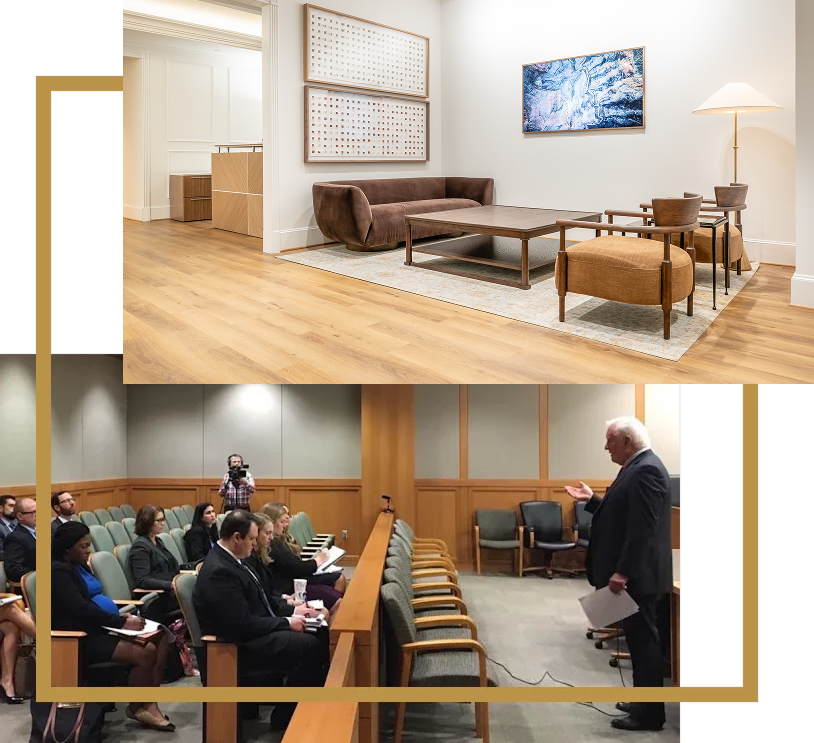
100+ Years of Combined ExperienceOur team is uniquely equipped with the experience and insight of seasoned veterans and the agility of some of the brightest minds in law.
-
Adapting to
Your NeedsWhether you prefer to visit us in one of our offices or meet using video conference, we're ready to help you in any capacity you need. -
A Team-Based, Collaborative EnvironmentOur clients always come first. We work with you as a team to determine a strategy to help achieve your goals while keeping a realistic view.
-
Integrity & Honesty Are EverythingFrom our first meeting to the conclusion of your case, we stand by the quality of our work. We always strive to do right by our clients.